
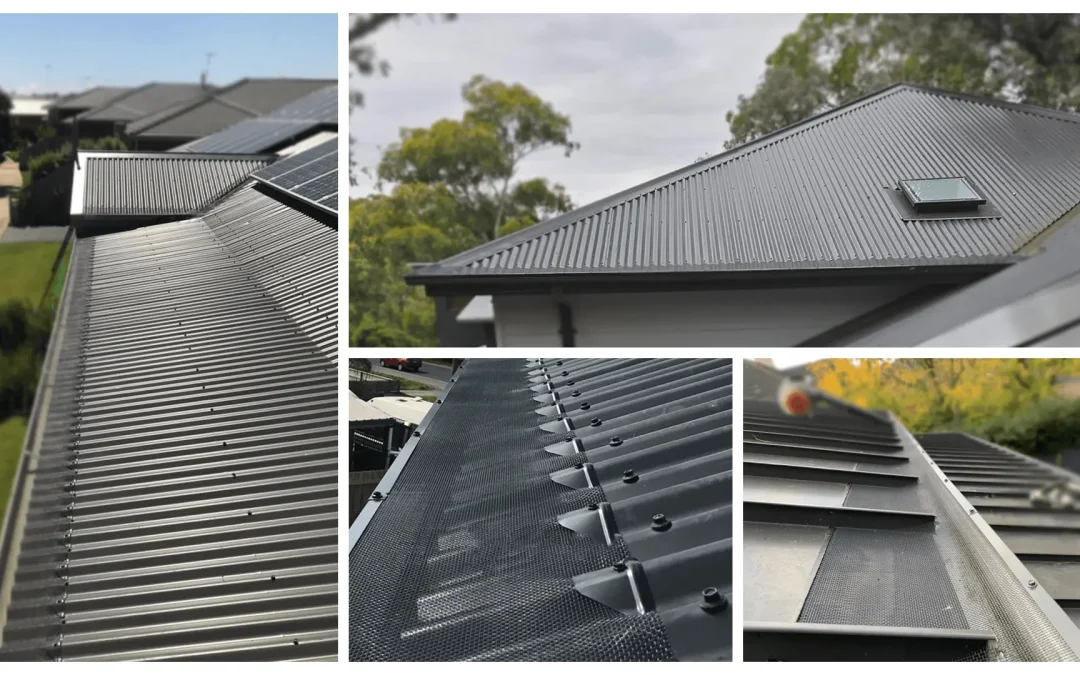

The first sign a multi-residential property has a gutter problem is rarely the gutter itself.
It is the stain running down a rendered wall. The damp patch that keeps coming back in the top-floor unit. The downpipe that gushes like a waterfall in heavy rain. The maintenance invoice that lands on the committee table again, even though someone “just had the gutters cleaned” a few months ago.
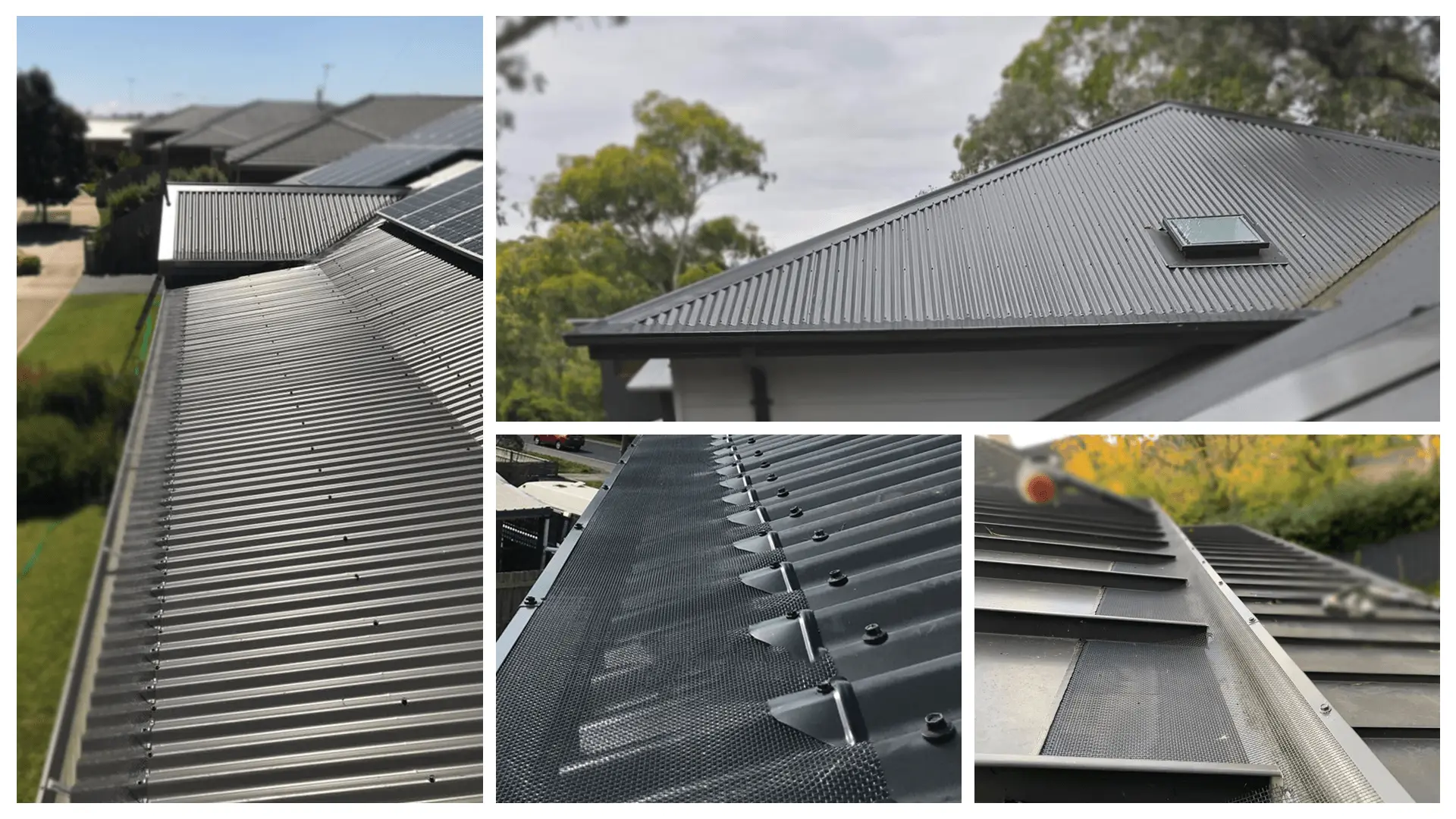
That is why choosing the right Gutter Protection for units, townhouse rows, and shared-roof developments deserves more thought than a quick product comparison. On a standalone house, a poor choice is annoying. On a body corporate property, it becomes a repeating cost, a safety risk, and a common source of disputes about who is responsible and what should have been done sooner. Australian guidance also makes clear that roof, gutter, and common-property responsibility often depends on the plan and the state framework, so the right decision starts with ownership and maintenance obligations, not just price.
Start with the real question: whose roofline is it?
Before comparing mesh sizes or finishes, work out whether you are dealing with common property maintenance, private lot responsibility, or a mix of both.
In NSW, roof and gutters are listed under owners corporation responsibility. In Queensland, the body corporate must maintain common property in good condition, but lot boundaries and the registered plan still matter. In Victoria, gutter cleaning sits squarely inside owners corporation maintenance planning. In other words, for any gutter guard for body corporate project, the first step is not product selection. It is understanding the building layout, the survey plan, and who will be approving and paying for ongoing roof and gutter maintenance.
That matters because units and townhouses are rarely as simple as they look from the street. Some have shared lower roofs and private upper roofs. Some have long linked gutters servicing multiple lots. Some have box gutters hidden behind parapets. Some townhouse estates look separate but still drain into connected sections. If your committee gets that part wrong, the cheapest quote on paper can turn into the most expensive headache on the roof.
Why multi-unit properties need a different kind of gutter guard
A house can often get away with a “good enough” solution. A multi-residential property usually cannot.
A proper gutter protection for units strategy has to account for more roofline, more debris, more people, and more consequences when water goes the wrong way. On shared buildings, blocked gutters do not just affect one resident. They can trigger overflow onto walkways, fascia damage, staining, water ingress, mould complaints, and repeated access costs every time contractors have to return with ladders, scaffolding, or elevated work platforms. Government maintenance guidance is blunt on the basics: gutters and downpipes need to stay clear and functional because blocked or damaged systems lead to overflow, staining, and water ingress.
That is also why strata gutter cleaning by itself is often a short-term answer. Cleaning is necessary, but if your property sits under gum trees, pines, seed pods, birds, and wind-blown debris, you are treating the symptom, not the pattern. For many committees, the smarter move is low maintenance gutter protection that reduces the cleaning cycle and makes the roof easier to manage across the whole property.
What to look for when choosing gutter protection for units
1. Choose a system that suits shared roofs, not just single homes
This sounds obvious, but it is where many quotes fall apart.
Units and townhouse complexes often have longer gutter runs, more corners, more valleys, and harder access. That means the best system is usually one designed as part of the roof edge, not something that simply sits inside the gutter channel. CPR’s current site language consistently positions its offer around fixed metal mesh systems that integrate with the roof edge and gutter, with Australian-made products, fixed-price contracts, and a complimentary clean before installation. For body corporate properties, that kind of clarity matters because committees need scope they can actually review and approve.
If the property has long linked rooflines, look for gutter mesh that creates a clean, continuous surface, sheds debris well, and can be detailed properly around corners, outlets, and transitions. A good gutter guard system should make water flow easier to manage, not add new weak points.
2. Match the system to the debris your site actually gets
Not every building has a leaf problem. Some have a bark problem. Some have fine blossom and grit. Some have birds pulling nesting material into sheltered corners. Some have a mix of all of it.
That is why “best” is the wrong word unless it is followed by “for this property.” A smart leaf guard choice depends on what lands on the roof week after week. A townhouse estate under mature eucalypts needs a different conversation from a coastal unit block dealing with wind-driven grit and salt exposure. CPR’s own recent content leans into this point: the right system depends on roof type, local debris, rainfall behaviour, and whether the problem areas include valleys, concealed gutters, or high-risk corners.
For a townhouse gutter guard project, ask the contractor what they see building up now, where it is building up, and which sections fail first. That answer will tell you more than a glossy brochure ever will.
3. Do not ignore valleys and concealed gutters
This is where shared properties get caught.
A lot of unit and townhouse buildings do not fail at the easy straight runs. They fail where water concentrates: valleys, sumps, rainheads, internal outlets, and hidden gutter sections. On low-slope and boxed-gutter designs, debris settles faster and water has less margin for error. CPR’s recent content specifically calls out box gutters, rainheads, and outlets as areas where debris control matters because small blockages can quickly turn into overflow and internal damage.
If your property has concealed drainage or tricky roof geometry, ask about a box gutter guard approach as part of the wider system, not as a bolt-on afterthought. This is one of those details that separates a quote written to win the job from a system designed to keep working.
4. Match material and aperture to rain, roof type, and fire risk
This is where a lot of committees either overspend or underspecify.
You want a system that suits the roof profile, handles local rainfall, and uses materials that make sense for the site. If the property has metal roofing, a properly detailed Colorbond gutter guard or compatible metal mesh setup is usually the conversation to have, especially where appearance matters across a whole townhouse row or newer unit development. CPR’s site repeatedly emphasises integrated metal mesh and compatibility with common Australian roof profiles, including Colorbond-style applications.
If the property is in a bushfire-prone area, the conversation becomes more serious. Australian bushfire guidance points to AS3959:2018, notes that roofs, guttering and fascias are part of the bushfire design picture, and highlights the value of non-combustible gutter guards. It also notes that ember control depends on tight detailing and apertures or gaps of less than 2 mm in relevant screened elements. CSIRO guidance similarly notes that tightly fixed mesh with an aperture of less than 2 mm can further reduce the chance of embers igniting fine debris in gutters. That is where a properly specified bushfire ember guard becomes a real building-performance choice, not just an upgrade line item.
5. Pick a system your committee can maintain
This is the part people skip because it is less exciting than materials and warranties.
No gutter protection system makes a roof maintenance-free. It makes it more manageable. That is a big difference.
Australian maintenance guidance consistently supports regular inspection of gutters and downpipes, especially before severe weather and after debris-heavy periods. Even CPR’s own material makes it clear that mesh reduces cleaning but does not remove the need for occasional inspection and upkeep. That makes a lot of sense for body corporate properties: the win is not “never look at the roof again.” The win is fewer emergency callouts, fewer dangerous ladder jobs, and a cleaner, more predictable maintenance plan.
For body corporate gutter maintenance, that predictability is gold. It helps with budgeting. It helps with resident expectations. It helps with insurance conversations after storms. And it gives your committee a much better chance of dealing with maintenance proactively instead of reactively.
What usually makes a poor choice?
Usually, it is one of four things.
First, buying on price alone and ignoring access, roof complexity, and drainage design.
Second, treating a multi-unit roof like a suburban single-dwelling roof.
Third, assuming strata gutter cleaning will always be enough, even when debris returns every season.
Fourth, installing something that looks tidy from the ground but is hard to inspect, hard to maintain, or poorly matched to the roofline.
The right system should make life easier for the property manager, the committee, and the residents. If it only looks good on quote day, it is the wrong system.
So what should a body corporate actually ask before approving the job?
Ask simple, practical questions.
How does this system handle the debris our property gets now?
How does it perform on valleys, corners, and any concealed sections?
What maintenance will still be required after installation?
Is the material suitable for our location, roof type, and any bushfire exposure?
Does the quote clearly cover preparation, detailing, and the sections most likely to fail first?
CPR’s own site makes a point of fixed-price contracts, a complimentary gutter clean before installation, and an inspection-led process. For larger shared properties, that is a useful framework because it keeps the job grounded in the roof you actually have, not the roof someone imagines from a satellite image.
Final word
The best unit complex gutter protection is not the flashiest system or the one with the most aggressive sales pitch. It is the one that suits the roof, the debris load, the access conditions, the maintenance structure, and the people responsible for approving it.
For body corporate committees, strata managers, and townhouse owners groups, that usually means choosing a durable gutter guard or gutter mesh system that is properly matched to the building, detailed for the hard-working parts of the roof, and realistic about ongoing maintenance.
Because on shared properties, the goal is not simply cleaner gutters.
It is fewer leaks, fewer callouts, fewer arguments, and better water damage prevention across the whole site.
And that is exactly where the right Gutter Protection earns its keep.
FAQs
1. Why is gutter protection important for units and townhouse complexes?
Gutter Protection helps stop leaves, twigs, seed pods, and other debris from building up in shared gutters. For units and townhouses, that means fewer blockages, less overflow during heavy rain, and a lower risk of water damage to roofs, walls, and common areas.
2. Is gutter protection worth it for body corporate properties?
Yes. For body corporate properties, gutter protection can reduce how often gutters need to be cleaned and help prevent ongoing maintenance issues. It can also lower the risk of expensive repairs caused by overflowing gutters, blocked downpipes, and water ingress.
3. What type of gutter guard is best for townhouse and strata properties?
The best gutter guard depends on the roof design, surrounding trees, debris type, and how easy the building is to access. For many shared residential properties, durable gutter mesh systems are often preferred because they are designed to handle ongoing debris while still allowing water to flow through properly.
4. Can gutter protection reduce strata gutter cleaning costs?
It can often reduce the frequency of strata gutter cleaning, which may help lower long-term maintenance costs. While gutters still need occasional inspection and upkeep, a good leaf guard system can make the maintenance cycle much easier to manage.
5. Is gutter protection suitable for body corporate and owners corporation maintenance plans?
Yes. Gutter protection for body corporate properties can be a practical part of a broader maintenance plan, especially where there are recurring gutter blockages, difficult access points, or a history of overflow during storms.
6. Can gutter protection help prevent water damage?
Yes. One of the biggest benefits of gutter protection is improved water damage prevention. By helping gutters and downpipes stay clearer, it reduces the chance of overflowing water damaging fascia, walls, ceilings, and surrounding common property.
7. Does gutter protection work on units with box gutters or complex rooflines?
Yes, but the system needs to be chosen carefully. Properties with concealed gutters, valleys, or box gutter guard requirements need a solution that suits the roof layout and drainage design, not just a standard off-the-shelf product.
Social Share:
Related Posts
Gutter Protection in Victoria: How to Choose the Right System for Your Roof
You only notice gutters when they fail. Water pours over the edge. The fascia stains…
Micro Mesh vs Foam vs Brush vs Reverse Curve: Which Gutter Protection Type Fits Your Home?
The first time most people think about gutter protection is after a problem. Water pours over…
Gutter Guard Mesh in Australia: How to Choose the Right Mesh for Your Roof, Rain, and Bushfire Risk
If you live in Victoria, you know gutters work hard. Heavy rain, leaf drop, birds, and bushfire…